
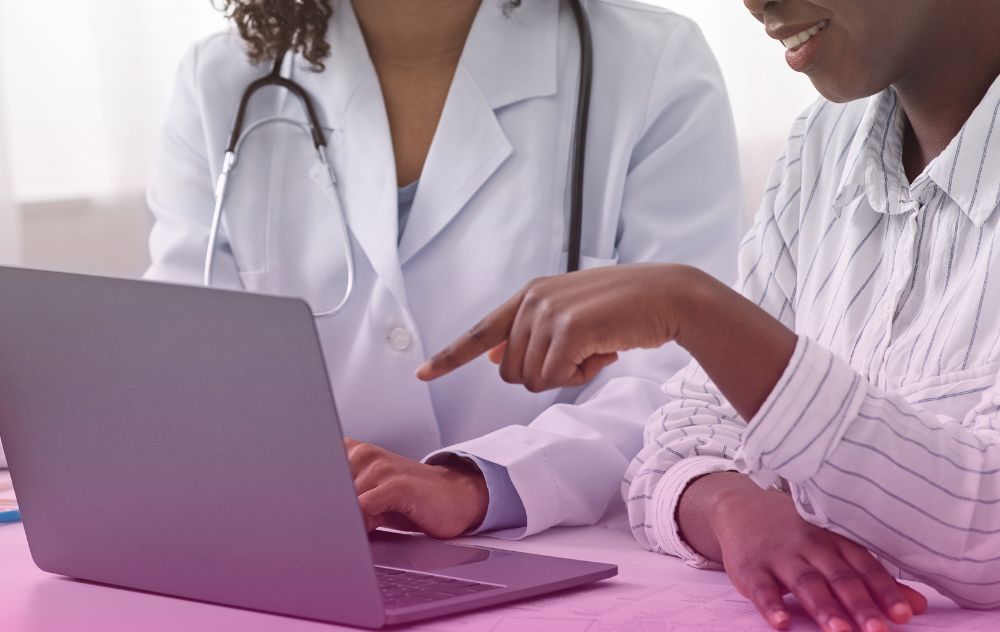
In a recent Women’s Health magazine article titled “I have Fibroids. These are the Questions I Wish I asked when I Got Diagnosed“, they covered the realities of education during time of diagnosis of fibroids and how to help women in the future.
Being diagnosed with fibroids can feel isolating and confusing. According to Women’s Health, while up to 80% of women will develop fibroids by age 50, for some, the journey feels like “a traumatic solo trip with no map, no guide, and no clear destination.” Many, like the author, normalize symptoms such as heavy, prolonged bleeding, painful cramps, and exhaustion until they severely disrupt daily life.
Fibroids are benign (not cancerous), but as Women’s Health emphasizes through Dr. Ohuoba, that doesn’t mean they’re harmless. The chaos they cause often depends on their size, location, and number—especially when they grow under the uterine lining, which can lead to heavy bleeding, bloating, body-image concerns, painful sex, and even affect fertility. This kind of physical and emotional disruption can truly make someone feel like they don’t recognize themselves.
Understanding all available treatment options is key. Options extend far beyond birth control. While hormonal methods like Myfembree or Oriahnn may help regulate cycles initially, surgical and minimally invasive interventions—such as hysteroscopy with D&C, abdominal myomectomy, uterine fibroid embolization, fibroid ablation, or, as a last resort, hysterectomy—should be discussed with your doctor. The choice often depends on your symptoms, treatment goals, and whether preserving fertility is a priority.
Speaking of fertility, the article explains that both fibroids themselves and certain treatments can affect the ability to conceive or carry a pregnancy. Submucosal fibroids, for example, may prevent embryo implantation; surgical procedures like D&C can pose a small risk of Asherman syndrome (scar tissue), though it’s rare. If future pregnancy is important, fertility-preserving options like myomectomy may be preferred over hysterectomy.
Finally, Women’s Health highlights broader health connections: heavy bleeding from fibroids can lead to iron-deficiency anemia, causing fatigue, hair loss, dizziness, weakened immunity, and even cognitive difficulties. Fibroids are also linked to hormone imbalances—particularly elevated estrogen levels—which can lead to symptoms such as breast tenderness, hair loss, and weight gain.
To read the full article on Women’s Health, click here.