
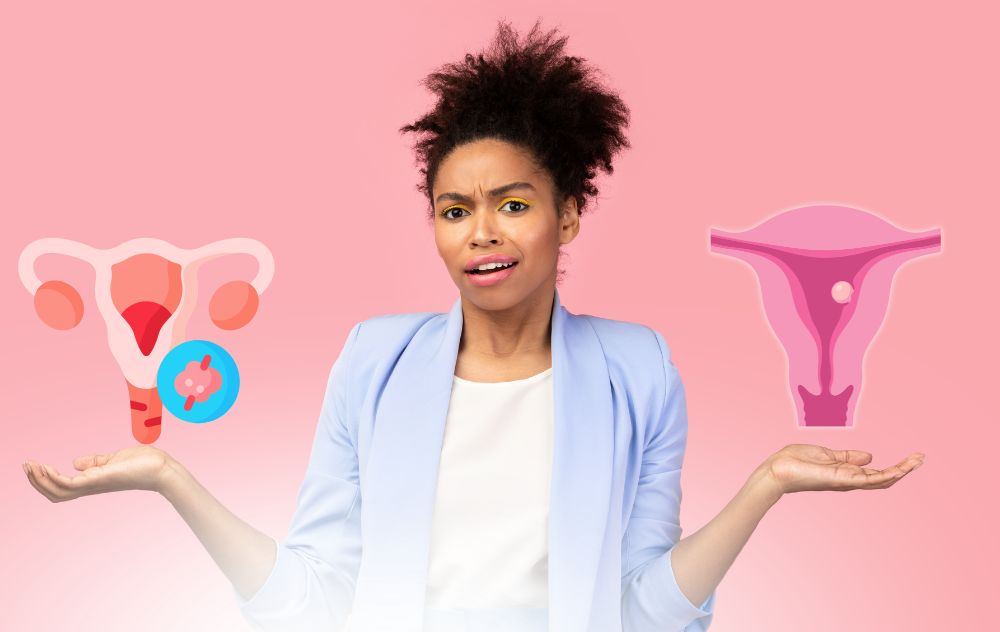
Fibroids can affect your period, your energy, your comfort, your relationships, your plans, and sometimes even the way you move through everyday life. Yet despite their impact, fibroids remain surprisingly misunderstood.
For many women, the journey starts with being told that heavy periods are normal. That pain is just part of having a menstrual cycle. That feeling exhausted every month is something to push through.
Others may know they have fibroids but still have questions about what that diagnosis actually means.
So why is there still so much confusion surrounding fibroids?
Part of the problem is that fibroids don’t look or feel the same for everyone. Another part is that symptoms involving menstrual health have historically been easy to normalize, minimize, or simply not talk about.
It’s time to change that conversation.
First, What Are Fibroids?
Uterine fibroids are noncancerous growths that develop in or around the uterus. They can vary in size, number, and location.
Some people have fibroids without experiencing noticeable symptoms. For others, fibroids can be associated with symptoms that significantly affect daily life.
These may include:
- Heavy or prolonged periods
- Pelvic pain or pressure
- Abdominal fullness or bloating
- Frequent urination
- Constipation
- Lower back discomfort
- Pain during sex
- Fatigue or weakness related to anemia from heavy bleeding
- Reproductive concerns in some individuals
The experience can be very different from one person to another, and that’s one reason fibroids can be so difficult to understand.
1. We’ve Normalized Symptoms That Deserve Attention
“I’ve always had heavy periods.”
It’s a phrase many women have said at some point.
When you’ve experienced something month after month for years, it can start to feel normal, even when it’s seriously affecting your life.
Maybe you plan your schedule around your period. Maybe you worry about bleeding through your clothes. Perhaps you avoid certain activities, struggle to sleep comfortably, or feel exhausted during your cycle.
You might simply think, This is just how my period is.
But something being familiar doesn’t necessarily mean it should be ignored.
If menstrual symptoms are consistently disrupting your daily life, they deserve a conversation with a healthcare provider.
2. Fibroids Don’t Affect Everyone the Same Way
There isn’t one universal “fibroid experience.”
One woman may experience significant bleeding. Another may primarily notice pelvic pressure or frequent urination. Someone else might discover fibroids during an examination or imaging for an unrelated reason.
Fibroids themselves are also different. They can develop in different locations in or around the uterus, and people can have one fibroid or multiple fibroids.
That’s why comparing your symptoms to someone else’s experience isn’t always helpful.
Your experience matters, even if it doesn’t look like somebody else’s.
3. Fibroid Symptoms Can Be Easy to Dismiss
Imagine experiencing pelvic pressure and assuming you’re simply bloated.
Or going to the bathroom more frequently and never considering that something in your pelvis could be contributing to the problem.
Or feeling exhausted every month without realizing heavy menstrual bleeding could potentially contribute to anemia.
Fibroid symptoms aren’t always immediately recognizable as fibroid symptoms.
And because many of them can also have other causes, getting properly evaluated matters.
The goal shouldn’t be to diagnose yourself. The goal is to recognize when your body is telling you that something deserves attention.
4. We Still Don’t Talk Enough About Periods
Periods are a normal biological process, but conversations about menstrual health can still feel uncomfortable or embarrassing.
That silence matters.
If no one talks openly about how much they’re bleeding, how much pain they’re experiencing, or how their periods affect everyday life, it becomes difficult to know when something may be outside your normal.
Opening up conversations about menstrual health doesn’t mean every symptom is caused by fibroids.
It means giving people the information and confidence they need to ask better questions about their health.
5. People May Not Realize How Much Fibroids Can Affect Daily Life
The impact of fibroids isn’t always visible.
Someone can show up to work, take care of their family, meet friends, exercise, and handle their responsibilities while privately dealing with difficult symptoms.
For some people, those symptoms can influence:
- What they wear
- Where they go
- How long they stay somewhere
- Whether they’re comfortable traveling
- Their exercise routines
- Their energy levels
- Their sleep
- Their sex life
- Their social plans
That’s part of what makes fibroid awareness so important.
Fibroids aren’t simply something that shows up on an ultrasound. There is a real person experiencing the symptoms behind that diagnosis.
6. Getting Diagnosed Doesn’t Automatically Answer Every Question
Hearing “You have fibroids” may explain some symptoms, but it can also create an entirely new set of questions.
Why did I develop them?
Are they causing my symptoms?
Will they get bigger?
Do I need treatment?
What are my options?
What questions should I ask my doctor?
Getting a diagnosis should be the beginning of an informed conversation, not the end of one.
Patients deserve clear explanations about their diagnosis and an opportunity to understand their options, ask questions, and participate in decisions about their care.
Breaking the Silence Around Fibroids
One of the most powerful things we can do is simply talk about fibroids more openly.
Talk about heavy periods.
Talk about pelvic pain.
Talk about anemia and exhaustion.
Talk about what it’s like to organize your day around access to a bathroom.
Talk about the questions you were afraid or embarrassed to ask.
And most importantly, listen when someone says their symptoms are affecting their life.
Awareness doesn’t mean diagnosing every difficult period as fibroids. It means recognizing that menstrual and pelvic symptoms deserve to be taken seriously.
Become a Fibroid Fighter
Being a Fibroid Fighter doesn’t mean you need to have all the answers.
It means advocating for your health.
It means asking questions.
It means learning about your body.
It means recognizing that you deserve to understand your diagnosis and your options.
And it means helping create a world where the next woman experiencing fibroid symptoms doesn’t have to wonder whether she’s overreacting, whether it’s “all in her head,” or whether she simply has to live with it.
Your symptoms matter. Your questions matter. Your experience matters.
The more we talk about fibroids, the less misunderstood they become.