Uterine fibroids are often seen as just a woman’s health issue, but they might actually show signs of what’s happening with your heart. An important recent study suggests that similar factors that cause fibroids to grow, such as high blood pressure, cholesterol, and inflammation, are also linked to heart disease.
The fibroid-heart connection is undeniable: this new research shows an 81% increased risk of heart problems for women with fibroids, which escalates to a massive 251% for those under age 40. This means that having fibroids could be your body’s way of giving you an early heads-up to start looking after your heart health. During Heart Health Awareness Month, it’s the perfect opportunity to explore how managing your fibroid journey can also benefit your heart health.
Landmark Study Reveals Fibroids Can Indicate Heart Disease
A ten-year study in the Journal of the American Heart Association has found that uterine fibroids are a major warning sign for heart disease. Women with fibroids are 81% more likely to develop heart problems, and for women under 40, that risk jumps to 251%. This occurs because the same hormones that cause fibroids can also damage arteries, while symptoms such as anemia can trigger systemic inflammation.
While the risk is universal, it manifests differently across various demographic groups:
- Black women: Are most likely to develop fibroids at a younger age, leading to longer lifetime exposure to fibroid-related cardiovascular stress.
- Hispanic women: Face the highest cardiovascular risk over a ten-year period,
- Asian women: Experience a sharper spike in heart-related issues within just five years of a diagnosis.
These disparities, driven by factors like hormonal stressors, anemia-related inflammation, and unequal treatment, highlight a critical need for research, yet the condition remains severely underfunded
Because fibroid symptoms like heavy bleeding and pelvic pain are often dismissed as “normal” period issues, many women miss the opportunity to protect their hearts. Experts agree that early detection of fibroids is a vital opportunity for doctors to assess a woman’s cardiovascular health and prevent serious heart problems later in life.
The Fibroid To Heart Connection
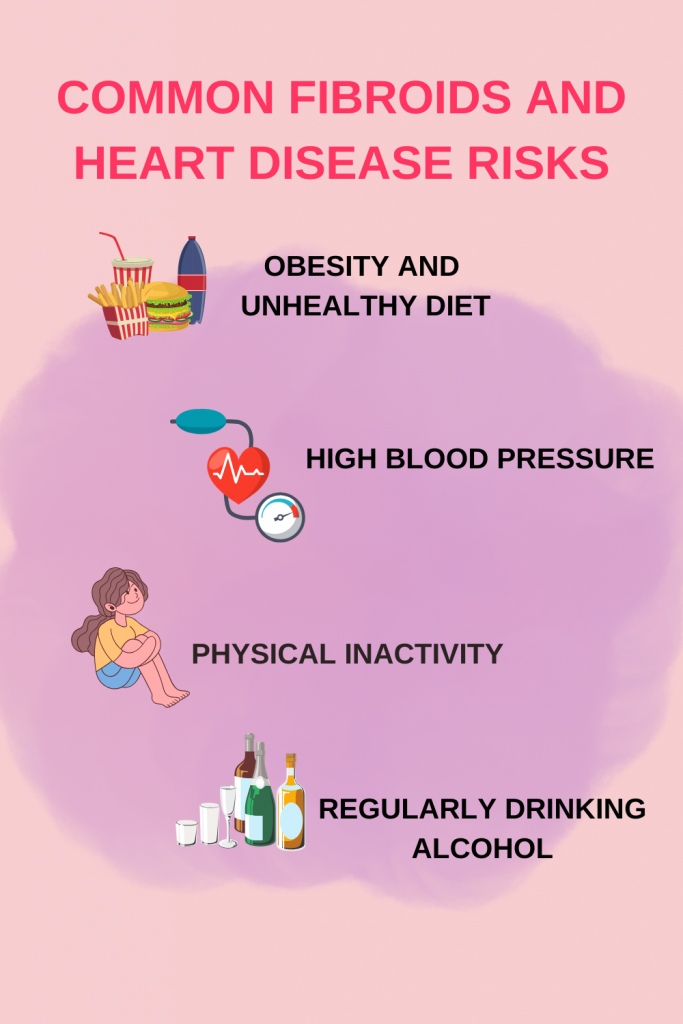
Uterine fibroids have been increasingly associated with hypertension and atherosclerotic cardiovascular disease. A study published in the Journal of the American Heart Associationfound that markers for cardiovascular disease were significantly more common in women who also had fibroids.
Interestingly, the risk remains complex due to several factors
- Treatment Side Effects: Hysterectomies are a known risk factor for cardiovascular disease, yet this major surgery is still frequently presented as the primary treatment option for many women with symptomatic fibroids
- Early Onset: In a screening of 1000 women aged 15 to 25, 52 percent were found to have fibroids on ultrasound. These women also showed a higher prevalence of cardiovascular risk factors.
Despite the significant health risks involved, a staggering education gap persists regarding women’s heart health. Research shows that while over 45% of women over age 20 struggle with elevated cholesterol, nearly 76% of those surveyed admit they don’t understand what their specific cholesterol numbers actually mean for their long-term well-being.
Closing this awareness gap is essential to empowering women to recognize their cardiovascular risk and take proactive steps toward cardiovascular health.
Cholesterol: The Good, the Bad, and the Estrogen Link
While we often treat “cholesterol” as a buzzword for poor health, your body actually needs it to produce reproductive hormones, create digestive bile, and repair tissue. The key is balance.
LDL vs. HDL: What’s the Difference?
- LDL (Low-Density Lipoprotein): The “bad” cholesterol. High levels lead to plaque buildup in your arteries, increasing the risk of heart disease, stroke, and Peripheral Artery Disease (PAD).
- HDL (High-Density Lipoprotein): The “good” cholesterol. This acts as a scavenger, absorbing excess cholesterol and transporting it to the liver for elimination.
Estrogen plays a dual role in a woman’s body: it influences fibroid growth and regulates cholesterol levels. When estrogen levels decline, particularly during perimenopause and menopause, LDL (bad) cholesterol and triglycerides often rise, while HDL (good) cholesterol drops. This hormonal shift can lead to arterial plaque buildup. Because fibroid growth is also heavily influenced by estrogen fluctuations, these two health concerns often peak during the same stages of life.
Fibroids and Hypertension
Some studies also suggest that high blood pressure and cholesterol levels may contribute to fibroids. High blood pressure damages artery walls, creating tiny tears where LDL cholesterol can accumulate. This systemic inflammation and vascular damage are thought to create an environment where fibroids are more likely to develop.
Managing Your Health Proactively
While researchers are still working to establish a direct cause-and-effect relationship, the link between lifestyle, genetics, and these three conditions is clear. Managing one often helps manage the others.
Steps you can take today:
- Consult Your Doctor: Get an annual lipid panel to check your HDL/LDL levels and monitor your blood pressure.
- Monitor Hormonal Changes: If you are entering menopause, discuss how declining estrogen may impact your heart health.
- Know Your History: Genetics plays a massive role in both fibroids and heart health.
Understanding how fibroids affect your overall health is essential for self-advocacy. While the physical symptoms of fibroids are often the most urgent concern, monitoring the related effects on your cardiovascular health, like blood pressure, is a proactive way to care for your long-term well-being.
Fibroid Fighters’mission is to ensure no woman navigates these health decisions in isolation. We encourage you to share your experiences or questions about managing and treating fibroids. Whether you are just beginning to seek answers or are further along in your journey, your insights help build a more informed community. Explore our website or call us at 855.455.5262 to access educational resources and join our mission to increase fibroid awareness.e.