
Whether you are celebrating Hanukkah, Kwanzaa, Christmas, New Year’s, Three King’s or Boxing Day, the holiday season is a time to connect with our friends and family. However, if you are living with uterine fibroids, the thought of long flights, rich holiday meals, and packed schedules can feel overwhelming.
If heavy periods, pelvic pain, or fibroid bloating are causing you holiday stress and fibroids feel like they are taking over your plans, you aren’t alone. Managing fibroid symptoms during this busy time is possible with a bit of preparation.
Here are six tips to help you prioritize your well-being and stay comfortable this season.
Tip 1: Traveling with Fibroids: Prepare for the Unexpected
Traveling with fibroids can be unpredictable due to irregular cycles or a sudden heavy flow.
- Seat Selection: When booking flights or train seats, try to choose an aisle seat. This allows for quick trips to the restroom if you experience an overactive bladder or heavy flow.
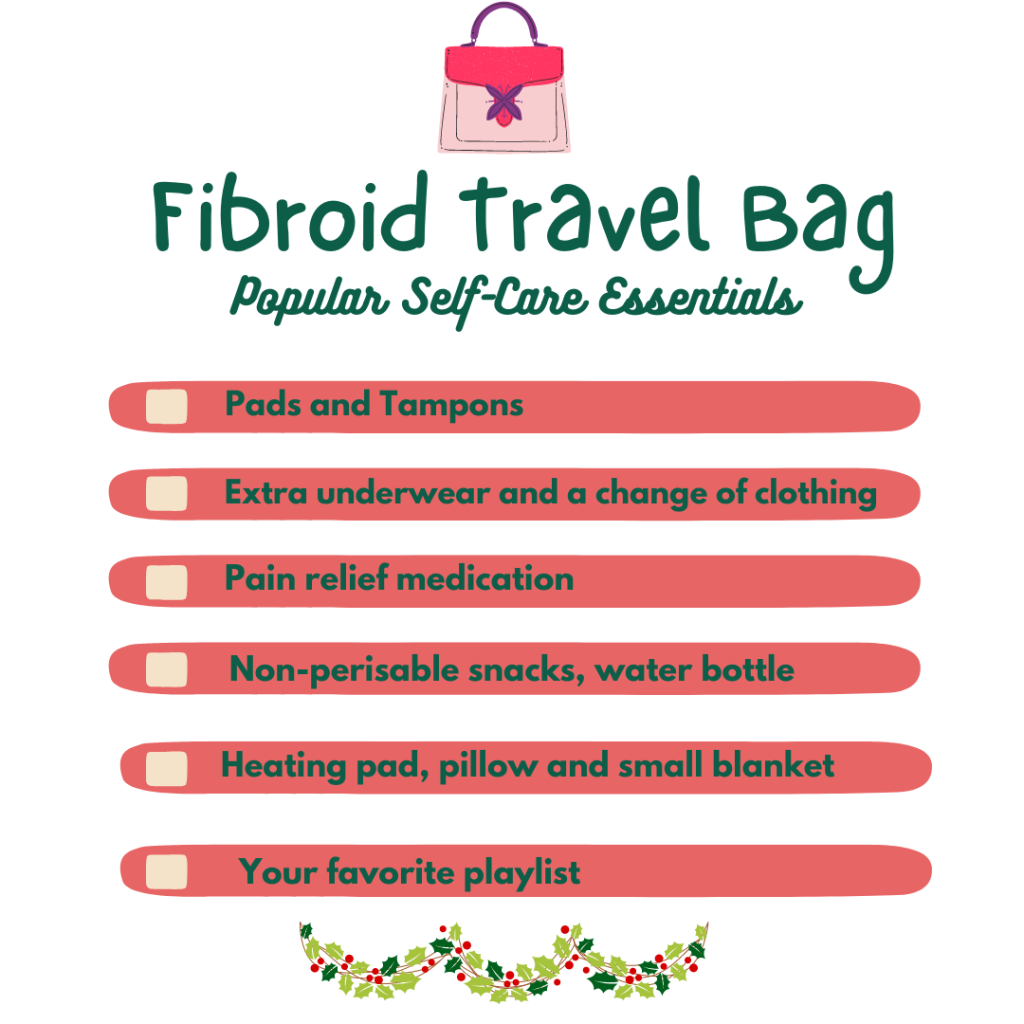
- The “Emergency Kit”: Even for short trips, pack a dedicated care bag in your carry-on containing extra-absorbent pads, a change of clothes, and over-the-counter relief for pelvic pain.
Tip 2. Listen to Your Body to Avoid Fatigue
Recognize your limits when it comes to activities outside of your normal routine. Fitting in holiday activities can lead to stress, more physical exertion than you’re used to, or not getting enough sleep. These changes could cause you to feel lethargic or result in your symptoms flaring up. Pay attention to your body; if you are not comfortable doing an activity, it is okay to say no.
Tip 3. Prioritize Restorative Sleep
Between late-night parties and sleeping in unfamiliar places, sleep hygiene often suffers. Sleep is vital for managing the inflammation associated with fibroids.
Maintain a Routine: Try to go to bed at a similar time each night to help your body regulate hormones and manage stress.
Tip 4: Follow a Fibroid-Friendly Holiday Diet
The holiday season is filled with rich foods that can sometimes worsen fibroid bloating or constipation.
- Foods to Avoid with Fibroids: Limit caffeine, alcohol, and highly processed sugars, as these can trigger inflammation or affect estrogen levels.
- Iron-Rich Foods for Fibroids: If you suffer from heavy bleeding, incorporate a fibroid diet rich in iron. Leafy greens, dried fruits, and legumes can help combat the exhaustion caused by anemia.
- Hydration: Drink plenty of water to help manage digestion and reduce bloating.
Tip 5: Find a Support System
The holiday season can feel isolating if your symptoms prevent you from participating in traditions.
- Talk About It: Share your feelings with a trusted friend or family member.
- Join the Community: Our Fibroid Ambassador, Kym Lee, hosts a monthly Instagram program, “Talk About U,” to share stories and information about living with fibroids.
Tip 6. Make Your Health a Priority with a Fibroid Screening
Don’t wait until the New Year to address your pain. If you haven’t been diagnosed but suspect you have fibroids, or if your symptoms have changed, the holiday break might be the perfect time for a fibroid screening.
- Get an Accurate Diagnosis: Ask your doctor for an ultrasound or MRI to confirm the size and location of any growths.
- Explore Non-Surgical Fibroid Treatment: Many women aren’t aware that they can find relief without major surgery. Uterine Fibroid Embolization (UFE) is a minimally invasive, outpatient procedure that can help you return to your life with a much shorter recovery time than a hysterectomy.
We’re Here to Help
The Fibroid Fighters Foundation is dedicated to helping you understand your treatment options and receive an accurate diagnosis.
- Ready to take the next step? Stay up-to-date with news and events by subscribing to our monthly newsletter.
We’re here to help you with any questions regarding your period or other women’s health concerns. Call us at 855.455.5262 or get in touch with us online.