

Every October, communities across the country come together to recognize Breast Cancer Awareness Month. While pink ribbons and fundraising events help raise awareness, one of the most important ways to honor this month is by learning about breast cancer risk factors, recognizing potential warning signs, and staying proactive about your health.
Breast cancer remains one of the most common cancers affecting women in the United States. According to the American Cancer Society, approximately 1 in 8 women will be diagnosed with invasive breast cancer during their lifetime. Early detection through regular screenings and awareness of changes in your body can help improve outcomes and expand treatment options.
Recent research has explored possible links between uterine fibroids and breast cancer. While fibroids do not cause breast cancer, both conditions may be influenced by hormones, particularly estrogen and progesterone. Understanding these shared factors can help women have more informed conversations with their healthcare providers.
Understanding the Connection Between Fibroids and Breast Cancer
Uterine fibroids are noncancerous tumors that develop within or on the uterus. Breast cancer and fibroids are very different conditions, but researchers have observed that both can be influenced by hormonal activity, especially estrogen exposure over time.
One study published in the Journal of Gynecologic Oncology found that women with a history of uterine fibroids had a higher incidence of breast cancer compared to women without fibroids. While additional research is needed to better understand this association, the findings highlight the importance of routine preventive care and regular health screenings.
Shared Risk Factors
Several factors may influence hormone levels and are associated with both uterine fibroids and breast cancer:
Excessive Alcohol Consumption
Alcohol consumption may affect estrogen levels in the body and has been associated with an increased risk of breast cancer. Some studies have also suggested a potential relationship between alcohol use and fibroid development.
Obesity and Physical Inactivity
Carrying excess body weight, particularly after menopause, may increase estrogen production and contribute to the risk of several hormone-sensitive conditions, including breast cancer and fibroids. Regular physical activity can help support overall health and hormone balance.
Prolonged Estrogen Exposure
Women may experience greater lifetime exposure to estrogen due to factors such as early menstruation, late menopause, obesity, or certain hormone therapies. Extended estrogen exposure has been associated with an increased risk of both conditions.
Age
The risk of breast cancer increases with age. Fibroids are also more commonly diagnosed during a woman’s reproductive years and may continue to affect quality of life as women get older.
Reproductive History
Women who begin menstruating at an early age or reach menopause later in life may experience a longer duration of hormone exposure, which can influence breast cancer and fibroid risk.
Know The Warning Signs
Uterine fibroids and breast cancer are the easiest to treat when the condition is detected in its early stages. This is why it’s important to watch for warning signs and discuss with your healthcare provider as symptoms arise.
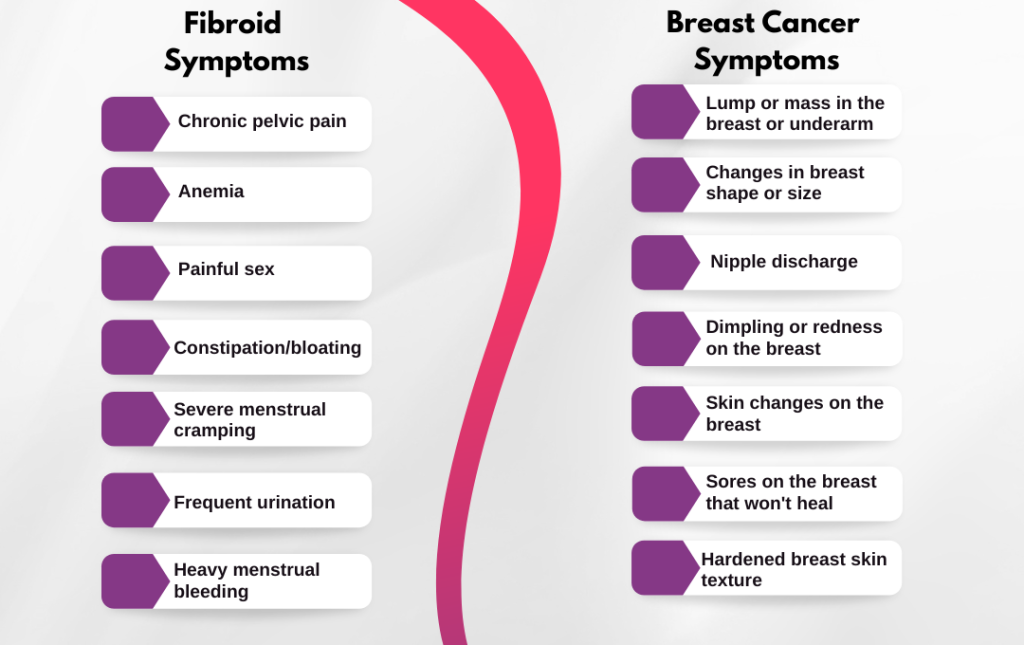
Potential Signs of Breast Cancer
Potential signs of breast cancer that signal a visit to your healthcare provider include:
- A new lump or thickening in the breast or underarm
- Changes in breast size or shape
- Skin dimpling or changes in breast appearance
- Nipple discharge that is not breast milk
- Persistent breast pain
- Nipple inversion or changes in nipple appearance
Common Fibroid Symptoms
Fibroid symptoms come with a range of symptoms depending of where the fibroids are located in the uterus. Any of these symptoms, if severe or persist for more than a month should be evaluated by your doctor:
- Lower back discomfort
- Heavy or prolonged menstrual bleeding
- Pelvic pain or pressure
- Frequent urination
- Abdominal bloating
- Pain during intercourse
If you are experiencing fibroid symptoms, use our Fibroid Symptom Checker to better understand your symptoms and determine whether it’s time to speak with a specialist.
Take a Proactive Approach to Fibroid Care
If fibroids are suspected, your healthcare provider may recommend diagnostic imaging such as ultrasound and, in some cases, MRI to help determine the number, size, and location of fibroids. This information helps guide treatment recommendations based on your symptoms, goals, and overall health.
Many women are surprised to learn that hysterectomy is not the only treatment option available. Uterine Fibroid Embolization (UFE) is a minimally invasive treatment performed by an interventional radiologist. UFE works by blocking blood flow to fibroids, causing them to shrink over time while preserving the uterus.
Benefits of UFE may include:
- Significant symptom relief for many women
- No surgical incision
- Short recovery time
- Outpatient treatment
- Preservation of the uterus
At the Fibroid Fighters Foundation, we aim to educate women with fibroids about their options when it comes to finding effective treatment solutions. If you’re experiencing symptoms and want to get checked for fibroids, give us a call at 855-455-5262 or contact us online.
The Fibroid Fighters Foundation is passionate about connecting women with one another to share their unique stories about living with fibroids. If you want to share your fibroid journey and connect with others, check out our testimonial page here where you can talk about your experience via video, audio, or text.
Resources for Breast Cancer Awareness:
https://www.mskcc.org/cancer-care/types/breast/diagnosis/stages-breast
https://emedicine.medscape.com/article/2007112-overview
https://www.breastcancer.org/symptoms/diagnosis/hormone_status